
Thank you for being part of my session at the Alberta Association of Optometrists
The After Show
In the latest episode of The After Show, hosts dive into Shawn Kanungo's thought-provoking session at the Alberta Association of Optometrists
Leaders,
Are you ready?
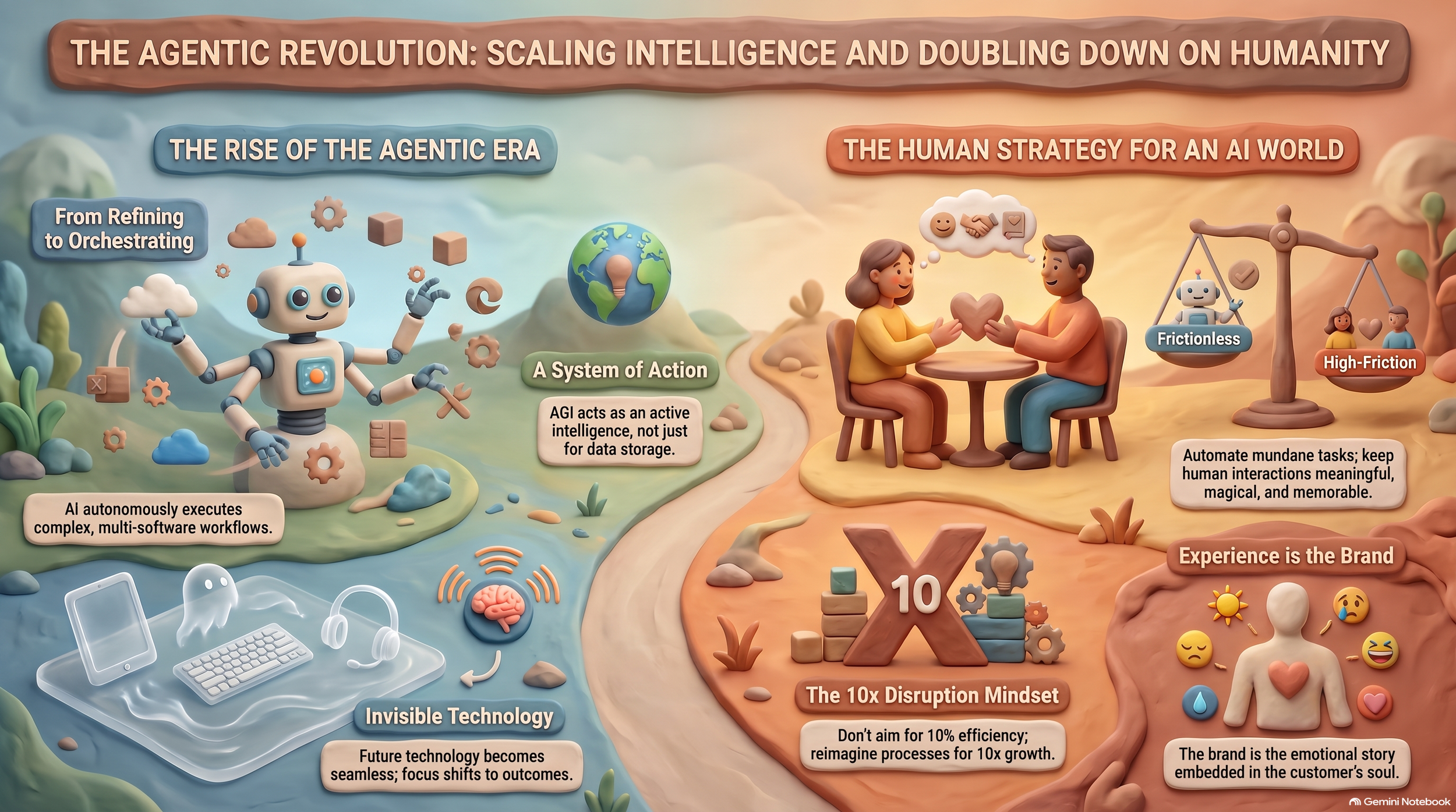
Artificial intelligence is rapidly transforming the modern workplace by shifting technology from a simple record-keeping system into an autonomous tool capable of executing complex tasks. During a keynote address at a conference, speaker Shawn Kanungo argued that while artificial intelligence often relies on conventional wisdom, it empowers professionals to transcend traditional boundaries and completely reimagine their organisations. Rather than replacing human labour entirely, these advanced agents can handle routine procedures across various software platforms, allowing people to focus on higher-level problem-solving and judgment. However, embracing this digital evolution requires leaders to overcome the fear of the unknown by developing a personal proficiency in new tools. Ultimately, true competitive advantage in an automated landscape stems from asking bold questions and cultivating a deep, human-centric commitment to customers.
KEY TAKEAWAYS (an AI-Output with Hallucinations)
MY #1 USED AI TOOL
Wispr Flow - I don’t type anymore, I just voice everything
My favorite AI AGENTS
Dots & GPT-6 Astra by OpenAI - AGI is here
Claude’s Opus 5.5 by Anthropic - The best model right now
Grok Bot by SpaceX AI - A downloadable AI team
Hermes - My personal AI Harness
Perplexity Computer - An AI agent orchestrator that has access to 19 different models
Muse by Meta - great personal AI agent - highly recommend for non-technical users.
Text-to-App
Lovable - Build any app with agentic reasoning (best at front-end)
v0 by Vercel - Text-to-Webpage (really good front-end)
Replit - Idea-to-App (best for full app)
Text-to-IMAGE/VIDEO
Claude Design for motion graphics - claude.ai/design
HeyGen - AI Video Avatar
ChatGPT Image 2.0 - Best Image Generator
Google’s Nano Banana Pro 2- 2nd Best Image Generator
Research & other
NotebookLM - Research and the two AI podcast hosts that you see above :)
Google AI Studio - Real-time AI co-presence
Clay - AI Outbound Sales | Generating lists of emails and sending cold outreach
Executive Briefing: The Agentic Era in Optometry, Outcome as a Service, and Practice Reinvention
Executive Summary
Eye care has reached a turning point. The first wave of AI (2022–2025) was about creating content: rewritten recall emails, social posts for the practice, summaries of clinical articles. The Agentic and AGI Era (2026 and beyond) is different. Current frontier models, including OpenAI’s Astra, Claude Fable/Opus 5.5 and speech-native voice models like Block’s Desa AI, can now act on their own. They can run front-desk workflows, work inside practice management and EHR systems, verify vision benefits, and run patient communication around the clock.
For optometry, this is the shift from practice software (systems of record) to Outcome as a Service (OaaS). Practices don’t want more dashboards, portals and dropdowns. They want results: a full schedule, completed recalls, clean claims, contact lens reorders that arrive on time, and patients who follow their treatment plans. Clinical knowledge and admin work are getting easier to automate. What matters more now is the doctor’s judgment, the patient relationship, and the courage to rethink how a practice runs.
To succeed, practices must avoid the “black hole of mediocrity.” That is the average practice with average wait times, phone tag and a forgettable visit. Winning practices push toward two extremes:
Frictionless/agentic automation (“AI”): Booking, insurance verification, intake, reminders, reorders and claims run invisibly in the background.
High-touch human experience (“Al”): Unhurried, caring time with the doctor and concierge-level optical styling at the moments that matter.
Bolting AI onto today’s front desk for a 10% gain isn’t enough. Practices should build a “V2 practice”: redesign the patient journey from scratch and aim for 10x improvements.
1. The Timeline of the AI Revolution in Eye Care (2022–2026+)
Era / TimeframeCore focus and capabilityWhat it looks like in an optometry practiceContent Creation Era (late 2022–2025)Text and media generation, basic summariesPolished recall emails and practice bios; social posts about blue light, dry eye month, back-to-school exams; staff prompting AI by hand for one-off tasksAgentic Era (2025)Autonomous task execution and workflow handlingAI starts getting work done: verifying vision plan eligibility, sending pre-visit intake, chasing unpaid claims, all behind the scenesAGI / Ambient Era (2026 and beyond)Broad cognitive parity with humans on general tasksFrontier models (OpenAI Astra, Claude Fable/Opus 5.5) built into practice operations; natural speech-to-speech voice receptionists; ambient agents that watch schedules, recalls, inventory and patient follow-up with no prompting
Key Technology Drivers for Practices
Speech-native voice models: Models trained directly on speech, such as Block’s Desa AI, enable warm, natural, emotionally aware phone conversations. An AI receptionist can reassure an anxious parent booking a child’s first eye exam or calmly triage a patient reporting sudden flashes and floaters, escalating them right away to the on-call doctor.
Ambient background agents: Agents such as OpenAI’s Dots, Meta’s Muse and SpaceX’s Grockbot run continuously. In a practice they track overdue recalls, expiring contact lens prescriptions, unused vision plan benefits before year-end, frame inventory, and patients who missed follow-up for glaucoma, diabetic retinopathy or myopia management. Staff no longer have to remember to run reports.
2. The Paradigm Shift: From Practice Software to Outcome as a Service
The Decline of Traditional Practice Software
For decades, optometry software made staff do the work: clicking through EHR templates, re-keying insurance data, toggling between payer portals, lab ordering systems and the practice management platform.
Software is going headless. Patients and staff increasingly won’t touch the interface at all. A patient says “I need to reorder my contacts” or “Can I get in this week? My eye is red,” and an agent handles scheduling, eligibility, prescription checks and ordering in the back end.
Systems of record vs. systems of action. EHRs and practice management systems have mostly been digital filing cabinets: paper charts, then spreadsheets, then cloud EHRs. AI adds a system of action that works 24/7. It can audit every claim before submission, reconcile vision plan payments, flag patients overdue for dilated exams, and confirm that every lab order and contact lens shipment arrived. No human team could do that continuously.
[Traditional Practice Software] ---> System of Record ---> Manual Data Entry, Phone Tag, Portal Hopping
[Modern AI Era]                 ---> System of Action ---> Autonomous Patient & Business Outcomes
The Business Model Shift
Software as a Service (SaaS): Vendors sell access to EHRs, scheduling tools, recall modules and reporting dashboards. The practice still has to do the work.
Outcome as a Service (OaaS): Vendors and partners are paid for results: filled appointment slots, completed recalls, collected claims, captured annual contact lens supplies, better treatment adherence. Practices will pay more for guaranteed outcomes than for software logins.
3. Practical Applications for the Optometry Practice
24/7 voice and avatar booking: Lifelike digital avatars and voice agents connected to the practice management system, like the Visionary Eye Center demo of booking a comprehensive eye exam end to end. They handle new-patient intake, insurance capture, location and provider selection, and scheduling at any hour.
Autonomous insurance and benefits verification: Agents check vision and medical plan eligibility before every visit, estimate patient out-of-pocket costs for exams, frames and lenses, and flag unused benefits before they expire.
Intelligent recall and care-gap closure: Ambient agents spot patients overdue for annual exams, diabetic eye exams, glaucoma monitoring or myopia control follow-ups. They then reach out with personalized, conversational messages and book them directly.
Clinical documentation support: Ambient scribing drafts exam notes, referral letters to ophthalmology and primary care, and patient education summaries for the doctor to review and sign. This gives doctors back time in the exam chair.
AI-assisted imaging review: Retinal photos and OCT scans are pre-screened and prioritized so doctors see the most urgent findings first. The optometrist keeps diagnostic authority, and any tools used must meet the relevant regulatory clearances.
Instant platform generation: Prompt-built tools, such as a Netflix-style education library for new contact lens wearers or a myopia management onboarding portal for parents, can be stood up quickly and wired into the CRM and recall automations.
AI-generated workflows: Single-prompt “Build with AI” tools create multi-step automations, such as a post-cataract co-management follow-up sequence or a dry eye treatment check-in series.
Autonomous content production: AI works full video editing suites by itself to turn a doctor’s educational talks (on dry eye, kids’ vision, screen time) into captioned vertical clips for social media.
Optical retail automation: Contact lens subscriptions reorder automatically, eyewear orders are tracked from lab to pickup, and patients get proactive “your glasses are ready” messages without a single phone call.
4. Strategic Frameworks and Leadership Mindsets for Practice Owners
1. Judgment Is the New Leverage
Execution and basic knowledge are now commodities. AI can run the front desk, billing and documentation faster than an untrained team member. Knowing how to work the software is no longer an edge.
Clinical and strategic judgment is the edge. Value lies in the doctor’s diagnostic judgment, in deciding which patient problems to solve (myopia, dry eye, specialty contact lenses, low vision), and in setting the practice’s direction.
The “rookie mindset”: Owners and ODs have to be willing to unlearn what made them successful, set ego aside, and disrupt their own practice model before a competitor or online retailer does.
2. Building a “V2 Practice” from Zero
Most practices make the mistake of keeping legacy workflows and bolting AI on top.
The V2 model: Design a second version of the practice around AI from the start. Imagine the patient journey from first search to annual recall with no legacy constraints.
The zero-based patient journey audit: Take each workflow (scheduling, check-in, pretesting, insurance, optical handoff, checkout, recall), strip it to zero, and ask:
What can be eliminated entirely? Paper intake, insurance calls, reminder calls.
What can be automated? Eligibility, reorders, recalls, claim scrubbing.
What needs deep human empathy and expertise? Delivering a diagnosis, frame styling, counseling a parent on a child’s progressing myopia.
10x timeline compression: “If you have a five-year plan to add a second location, launch a dry eye center, or double your myopia management patients, why can’t you do it in six months?” That question forces real reinvention instead of 10% fine-tuning.
3. AGI as “Awakening the Greatness Inside”
AI doesn’t have to mean cutting staff. It can mean awakening the greatness inside your team:
For decades, practices ran like assembly lines: technicians stuck pretesting, front-desk staff on hold with insurers, doctors charting late into the evening.
AI removes the admin drudgery: copy-pasting between systems, chasing eligibility, manual reminders. Roles can then be built around people’s strengths. Technicians grow into patient educators, opticians become style consultants, and doctors focus on clinical care and specialty services.
5. Winning the Market: The Friction vs. Frictionless Edge in Eye Care
Patients now expect Amazon-speed convenience, and online eyewear and contact lens retailers keep raising the bar. The practice stuck in the middle, with slow phones, average service and a forgettable visit, falls into the black hole of mediocrity. Winning practices go to the extremes:
                         [THE EYE CARE MARKET SPECTRUM]

     FRICTIONLESS                                    HIGH-EXPERIENCE
      AUTOMATION              BLACK HOLE                FRICTION
        ("AI")              OF MEDIOCRITY                 ("Al")
  ---------------------    -----------------    ------------------------
  • Instant online booking  • Phone tag          • Unhurried doctor time
  • Auto benefit checks     • Long waits         • Personal frame styling
  • Contact lens auto-ship  • Generic exams      • Specialty care programs
  • E.g., online retailers  • Forgettable visit  • E.g., boutique optical
The Two Winning Profiles
Frictionless and agentic (“AI”): Everything administrative is invisible. Booking happens in seconds, benefits are verified before arrival, intake is done ahead of time, contact lenses arrive automatically, and glasses-ready alerts go out on their own. The patient never waits on hold or fills out the same form twice.
Experiential friction and care (“Al”): The practice deliberately slows down where it matters. The doctor takes time to explain a diagnosis, an optician gives a styling session that feels like a luxury boutique, and specialty programs for dry eye, myopia control or scleral lenses feel personal. Think Four Seasons hospitality or the Apple Genius Bar, applied to eye care.
Cultural Capital and Storytelling
Volume of content (constant social posts and educational clips) gets reach. The lasting edge is cultural capital: being the practice the community talks about. Trust is built through stories, such as the child who could finally see the board, the patient whose early glaucoma was caught in time, or the frame selection experience people post about on their own. When the experience is remarkable, patients become your marketing.
If you scrolled this far.
Here’s more!